



Sky Without Stars (System Divine Book 1)
by Jessica Brody and Joanne Rendell
Simon and Schuster, March 2019
“Epic tech…immersive world-building…jaw-dropping twists. This brilliant reinterpretation of a beloved classic is not to be missed!” Marissa Meyer, #1 New York Times bestselling author of The Lunar Chronicles
Co-written by Joanne Rendell and Jessica Brody, this sweeping reimagining of Les Misérables tells the story of three teens from very different backgrounds who are thrown together amidst the looming threat of revolution on the French planet-colony of Laterre.
A thief.
An officer.
A guardian.
Three strangers, one shared destiny…
When the Last Days came, the planet of Laterre promised hope. A new life for a wealthy French family and their descendants. But five hundred years later, it’s now a place where an extravagant elite class reigns supreme; where the clouds hide the stars and the poor starve in the streets; where a rebel group, long thought dead, is resurfacing.
Whispers of revolution have begun—a revolution that hinges on three unlikely heroes…
Chatine is a street-savvy thief who will do anything to escape the brutal Regime, including spy on Marcellus, the grandson of the most powerful man on the planet.
Marcellus is an officer—and the son of a renowned traitor. In training to take command of the military, Marcellus begins to doubt the government he’s vowed to serve when his father dies and leaves behind a cryptic message that only one person can read: a girl named Alouette.
Alouette is living in an underground refuge, where she guards and protects the last surviving library on the planet. But a shocking murder will bring Alouette to the surface for the first time in twelve years…and plunge Laterre into chaos.
All three have a role to play in a dangerous game of revolution—and together they will shape the future of a planet.
Power, romance, and destiny collide in this sweeping reimagining of Victor Hugo’s masterpiece Les Misérables.
Where to buy
We'd love it if you could support your local independent bookstore!
Find your closest one at IndieBound
Our book is also available at:

Between Burning Worlds (System Divine Book 2)
by Jessica Brody and Joanne Rendell
Simon and Schuster, March 24th 2020
Les Misérables meets The Lunar Chronicles in the out-of-this-world sequel to Sky Without Stars that’s an “explosion of emotion, intrigue, romance, and revolution” (Stephanie Garber, #1 New York Times bestselling author of the Caraval series).
A traitor.
A prisoner.
A fugitive.
Wanted by the Regime. Destined to save the planet.
Laterre is on the brink of war. The Third Estate are rioting against the injustices of a corrupt system. The Patriarche, reeling from the murder of his only heir, makes brutal attempts to quash the unrest, while a new militant faction launches a series of deadly attacks.
And three outlaws find themselves pulled into the fray…
Marcellus is now a traitor to his planet, willing to do anything to stop his grandfather from seizing control of Laterre, even if it means joining the Vangarde, a rebel group back from the dead.
Chatine is a prisoner on Bastille. Desperate to survive the harsh conditions of the moon, she becomes embroiled in the Vangarde’s dangerous attempt to free their infamous leader.
Alouette is a fugitive who has been lied to her entire life. Searching for the truth about her mysterious past, she soon finds herself hunted by the Regime for reasons she’s only beginning to understand.
But when Laterre is threatened by the emergence of a deadly new weapon, these three renegades must risk everything, traveling to the far reaches of the System Divine and into the white hot center of a planet ready to ignite.
Cover art: Billelis
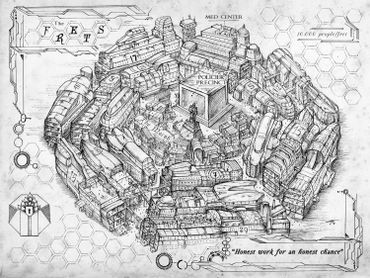
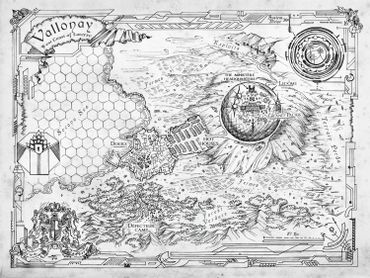
Map artwork: Francesca Bearald
Where to buy
We'd love it if you could support your local independent bookstore!
Find your closest one at IndieBound
Our book is also available at:

Suns Will Rise (System Divine Book 3)
by Jessica Brody and Joanne Rendell
Simon and Schuster, Coming soon: August 2021
"Les Misérables meets The Lunar Chronicles in the out-of-this-world sequel to Sky Without Stars that’s an “explosion of emotion, intrigue, romance, and revolution” (Stephanie Garber, #1 New York Times bestselling author of the Caraval series).
An heir.
A renegade.
A convict.
A cyborg.
A Défecteur.
Five rebels. One revolution.
It’s been three months since the Patriarche was beheaded, leaving behind no heir. From the outside, Laterre seems to be flourishing. General Bonnefaçon has cleaned up the streets, fed the hungry, and restored peace while the next leader is decided upon. But dangerous rifts threaten to shatter the planet from within.
The Red Scar is killing anyone with a legitimate claim to the Regime, while the Vangarde and their freed leader are preparing to overthrow it.
Then, it’s revealed that the Patriarche had a child in secret. A missing heir…
Alouette is the general’s prisoner, interrogated on the whereabouts of his renegade grandson. Marcellus is desperately searching for her, knowing she’s the key to the Vangarde’s plan, but unaware that he’s being hunted by a determined new cyborg. Meanwhile Chatine grows restless, living with a rebel group she doesn’t fit into. Until an old friend solicits her help to save his Défecteur community from a mysterious, new threat. A threat that will tie them all together.
When the general makes an explosive play for power, allegiances will shift, rebels will become leaders, barricades will rise, and the tinderbox of Laterre will finally ignite, launching a revolution five hundred years in the making.
Where to pre-order
We'd love it if you could support your local independent bookstore!
Find your closest one at IndieBound
Our book is also available at:

Joanne Rendell is the author of six novels and holds a PhD in English Literature. She co-teaches "Foundations of Fiction," a bestselling fiction writing course on Udemy, Writing Mastery, and LinkedIn Learning, and she offers one-on-one mentoring and editing services for writers and artists. Joanne is also a board member for the youth Shakespeare company, New Genesis Productions. With her family, Joanne divides her time between NYC and New Paltz, NY.